Septic Tank Pumping in Spokane
Septic tank pumping service for Spokane homes and the surrounding towns. Learn the warning signs, the process, and how local soil affects frequency.
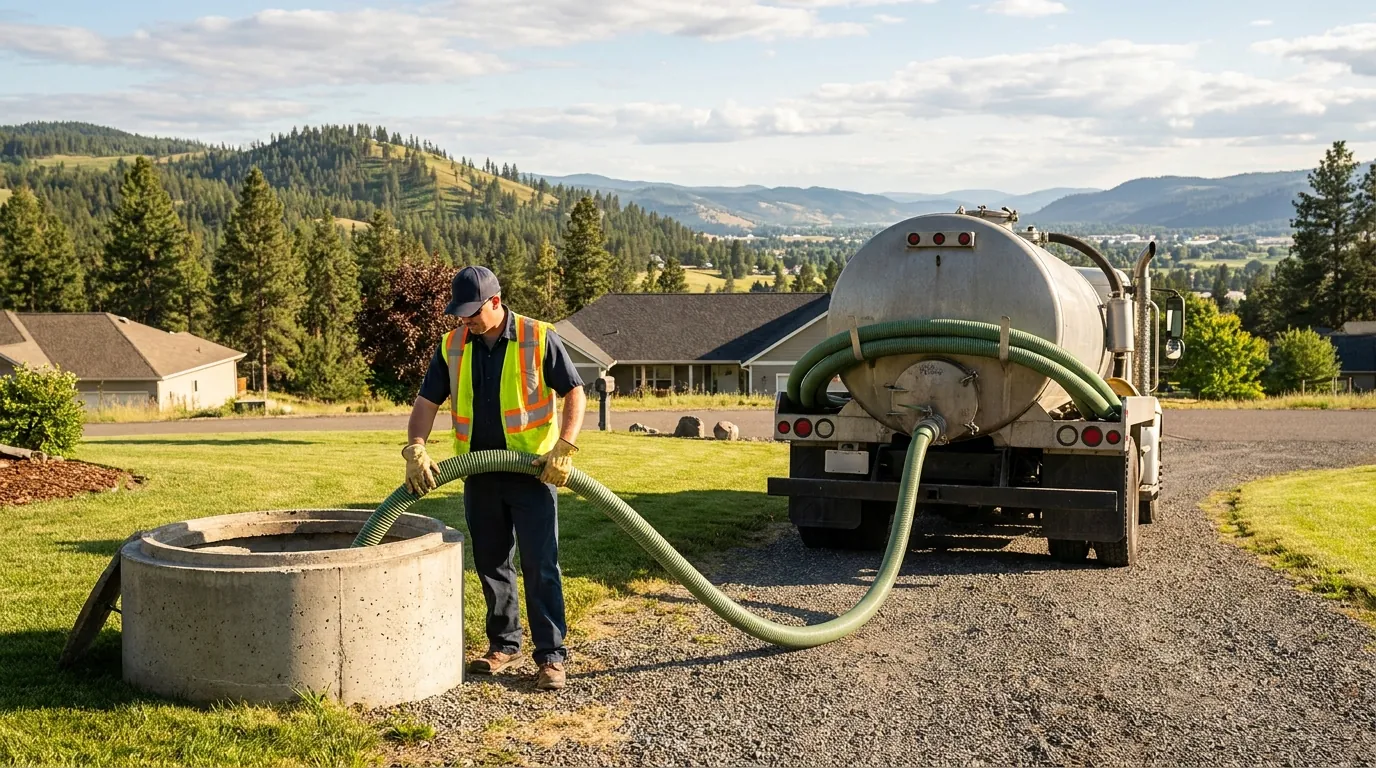
When a septic tank needs pumping
Every septic tank collects two things it cannot break down: a sludge layer of settled solids on the bottom and a scum layer of grease and light material on top. Between them sits the clarified liquid that flows out to your drain field. Septic tank pumping removes the sludge and scum before those layers grow thick enough to escape the tank and clog the field. That is the whole point of pumping on a schedule rather than waiting for a backup.
Around Spokane, the signs a tank is due are consistent. Drains across the house slow at the same time. You hear gurgling in the lowest fixtures — often a basement floor drain or a first-floor toilet. Ground over the tank or drain field feels spongy, smells sour, or grows a strip of unusually green grass. Sewage odor near the tank lid after a wet stretch is another common tell. If you catch these early, a routine pump-out solves it; ignored, the same symptoms turn into a drain field problem that costs far more.
This page covers pumping specifically. If you are not sure whether the tank is the issue, a septic system inspection locates the tank, measures the layers, and confirms what the system actually needs.
What a pump-out involves
A standard septic tank pumping visit follows the same core steps, adjusted for how your tank is built and buried.
-
Locate and uncover the lids
The tank has one or two access ports over the inlet and outlet baffles. On older Spokane-area properties these are often buried under several inches of soil or sod and have to be dug out before work starts. Risers installed at the surface make future visits faster.
-
Measure the sludge and scum
Before pumping, the layers are checked so there is a record of how full the tank was. That reading is what tells you whether your current pumping interval is right or should be shortened.
-
Pump both compartments
A vacuum hose removes the liquid, scum, and sludge from every compartment. A single-pass pump that only skims the liquid leaves the solids behind and defeats the purpose.
-
Inspect the baffles and walls
With the tank empty, the inlet and outlet baffles, the tank walls, and any effluent filter are visible. Damaged baffles let solids reach the drain field, so this look matters as much as the pumping itself.
-
Backfill and note the next date
Lids are sealed and the area restored. You get a target window for the next service based on the measured layers and your household size.
How Spokane conditions change the schedule
Pumping frequency is not one number. It depends on tank size, how many people live in the house, how much water and solids go down the drain, and the soil the system sits in. Spokane's glacial soils vary a lot over short distances — a lot on the South Hill can drain very differently from one in the Valley or out toward Otis Orchards-East Farms. Where soil percolates slowly, effluent leaves the tank less readily and the whole system works harder, which makes staying ahead with pumping more important.
Season matters too. Eastern Washington summers are dry, but wet winters and spring snowmelt raise the water table in low-lying parcels. When groundwater rises around a tank and drain field, a system that coped all summer can struggle, and a marginally overdue tank is the one that backs up. Homes near Green Bluff, Suncrest, and the river bottoms tend to feel this most.
If a pump-out reveals a tired drain field, the fix is a separate job — see drain field service for what that looks like.
Schedule septic tank pumping
Tell us your address, roughly how many people live in the home, and when the tank was last pumped, and we will recommend a service window.
Call for routine scheduling or a same-week visit.
Frequently asked questions
How much does septic tank pumping cost in Spokane?
Cost depends on tank size, how accessible the lids are, and how much solid buildup has to be removed. Tanks that are hard to locate or badly overdue take longer and cost more. We give a price range once we know your tank size and access before any work begins.
How often should I pump my septic tank?
Most Spokane-area households land in a three-to-five-year window, but it varies with tank size and how many people use the system. The layer measurements taken at each pump-out are the most reliable way to set your interval.
Do you pump both compartments of the tank?
Yes. A complete pump-out removes liquid, scum, and sludge from every compartment through the correct access ports. Skimming only the liquid leaves solids behind and shortens the life of your drain field.
Can you find my tank if the lids are buried?
In most cases, yes. Buried lids are common on older properties around Spokane and simply add some digging to the visit. If the tank cannot be located from records, a septic system inspection can help pinpoint it.