Grease Trap Pumping in Spokane
Grease trap pumping for Spokane restaurants and commercial kitchens. Warning signs, the pump-out process, and how to keep traps compliant and clog-free.
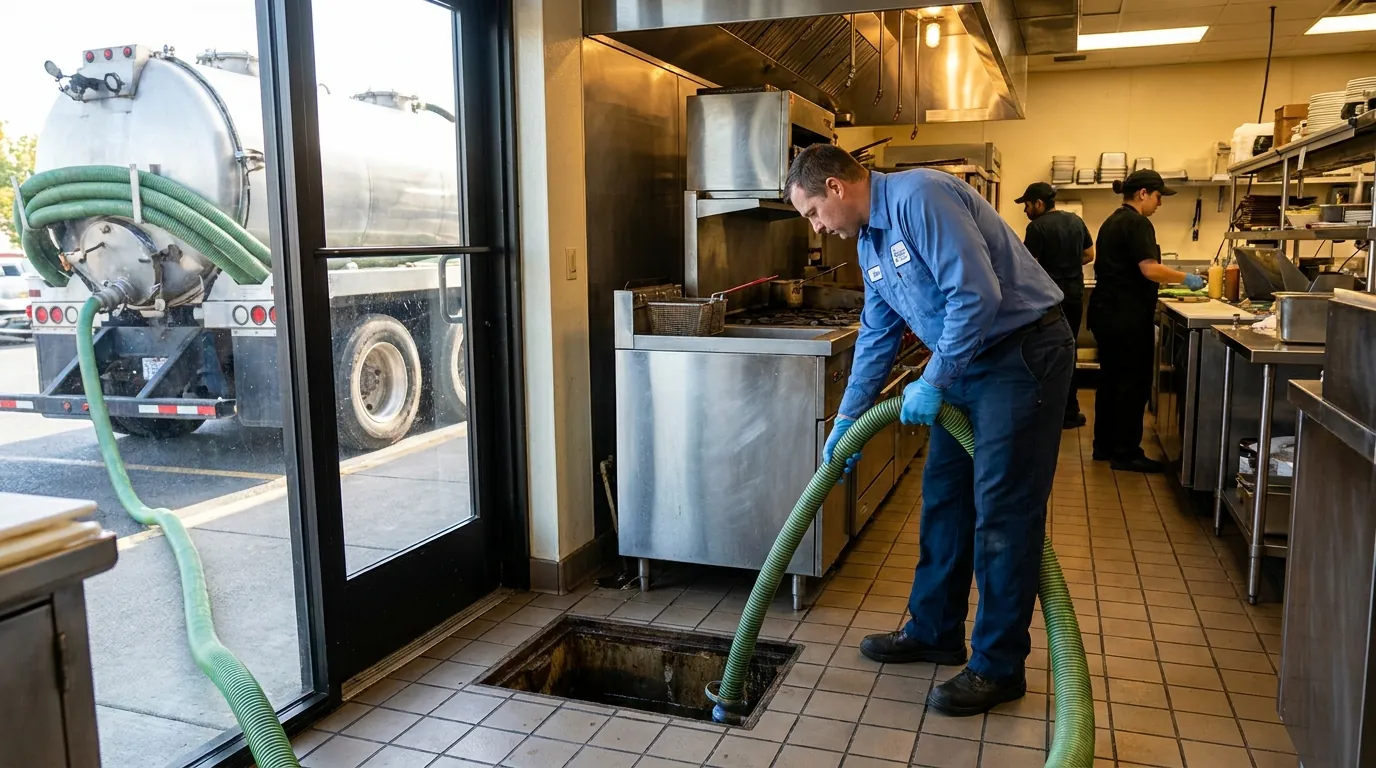
Why grease traps need regular pumping
A grease trap sits between your kitchen drains and the rest of your plumbing, slowing wastewater long enough for fats, oils, and grease to float to the top and food solids to settle to the bottom. Only the water in the middle should move on. When the trap fills with grease and solids, that separation stops working, and the fats push through into your lines — where they cool, harden, and cause the blockages and backups every kitchen dreads.
The signs a trap is overdue are practical ones: slow kitchen drains, a returning sour or rancid smell, grease appearing where it should not, and a trap that looks full when you check it. For a septic-connected property, an unmanaged grease trap is worse than an inconvenience — grease that reaches the tank and field can smother the system and shorten its life dramatically. Whether you are on city sewer or septic, staying ahead of the trap protects everything downstream.
What a grease trap pump-out involves
A complete grease trap service empties and inspects the trap, not just skims the top.
-
Full pump-out
The floating grease, the settled solids, and the water are all removed so the trap starts empty. A partial skim leaves the solid layer that clogs the outlet.
-
Scrape and clear
Grease clings to the walls, baffles, and lid. These surfaces are scraped so hardened buildup does not immediately re-narrow the trap.
-
Inspect baffles and fittings
The inlet and outlet baffles and the trap's seals are checked, since damaged baffles let grease pass straight through and defeat the trap.
-
Confirm flow
We verify the trap drains cleanly and note the buildup level so your service interval can be dialed in to your kitchen's volume.
-
Record for compliance
You get a record of the service, which matters for the documentation many commercial kitchens are expected to keep.
Interval, volume, and local considerations
How often a trap needs pumping is driven almost entirely by kitchen volume and menu. A busy Spokane or Spokane Valley restaurant with heavy frying builds grease far faster than a small café, and traps are generally serviced when the combined grease and solids reach a set share of the trap's capacity. Waiting past that point is when grease starts escaping into your lines. Cold weather compounds the risk, because grease that is already in your plumbing hardens faster in an unheated line run during a Spokane winter.
For properties on septic rather than sewer, grease control is part of protecting the whole system. Grease that slips past a full trap heads for the tank, where it thickens the scum layer and can migrate toward the field. Pairing regular trap service with routine septic tank pumping keeps both in balance, and if a grease problem has already reached the tank, a septic system inspection can show how far it has gone.
Schedule grease trap pumping
Tell us your trap size and how busy your kitchen runs, and we will help set a service interval that keeps your lines clear.
Recurring schedules available for commercial kitchens.
Frequently asked questions
How often should a commercial grease trap be pumped?
It depends on kitchen volume and how much frying you do, but traps are generally serviced once grease and solids reach a set share of capacity. A high-volume kitchen may need service far more often than a small café; we help set the interval from your trap's readings.
What happens if I let my grease trap go too long?
Grease pushes past the full trap into your plumbing, where it cools and hardens into blockages that cause slow drains and backups. On a septic property it can also reach the tank and field and shorten the system's life.
Do you pump the whole trap or just skim the grease?
The whole trap. We remove the floating grease, the settled solids, and the water, then scrape the walls and baffles. Skimming only the top leaves the solid layer that clogs the outlet.
Can grease trap service help my septic system?
Yes, if you are on septic. Keeping grease out of your lines keeps it out of your tank, where it would otherwise thicken the scum layer and threaten the drain field. It works hand in hand with regular tank pumping.