Septic System Inspection in Spokane
Septic system inspection in Spokane for home sales, repairs, and peace of mind. What we check, what problems look like, and how to decide next steps.
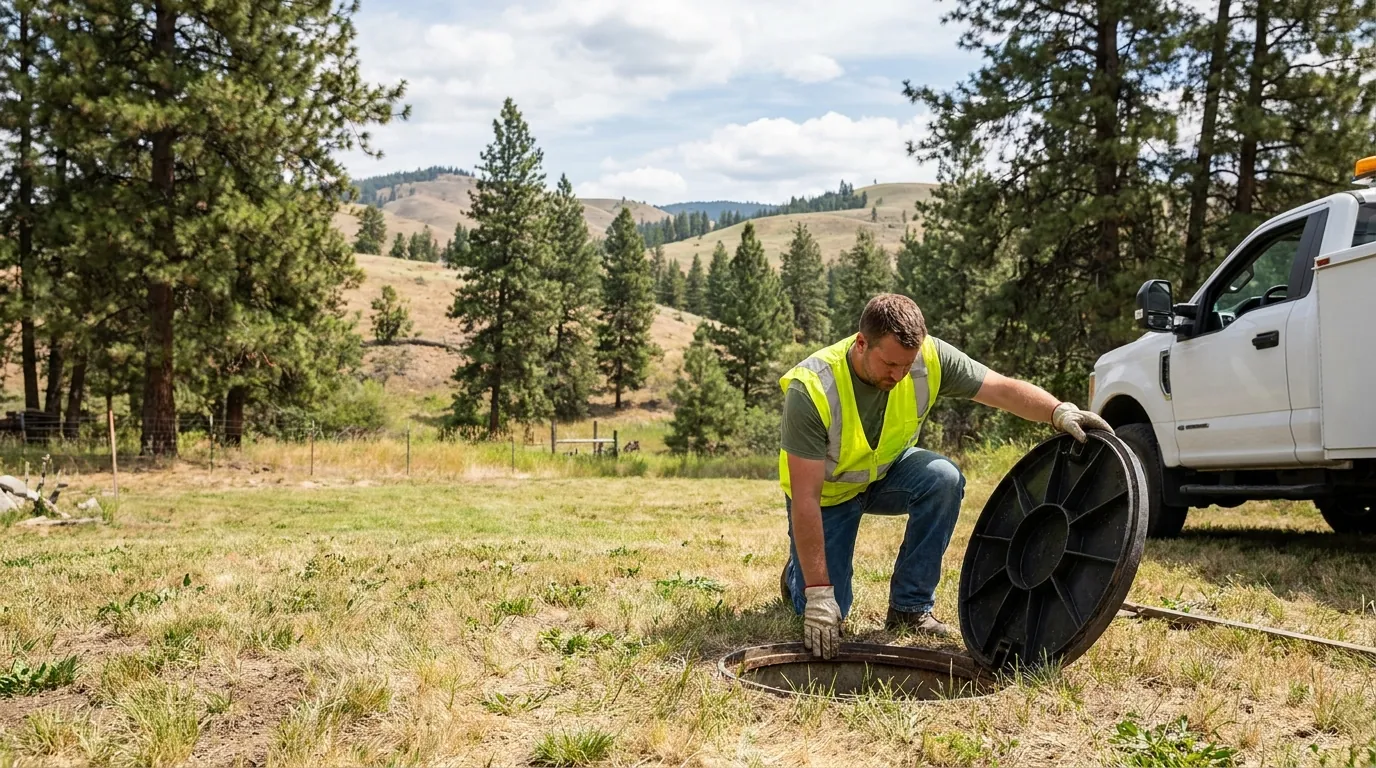
Why inspect a septic system
A septic system hides almost entirely underground, so trouble builds without warning until a fixture backs up or the yard goes wet. An inspection brings the whole system into view: how full the tank is, whether the baffles and effluent filter are intact, how well the drain field is accepting flow, and whether anything is leaking or settling. People book inspections for three main reasons — buying or selling a home, chasing down a symptom, or confirming a system is healthy before committing to another few years on it.
Warning signs that call for a look include slow drains throughout the house, sewage odor indoors or over the tank, soggy or greener-than-usual ground above the drain field, and gurgling fixtures. Any of these can point to a full tank, a failed baffle, or a struggling field, and an inspection tells you which. Catching septic system repair needs early is almost always cheaper than reacting to a failure.
What the inspection covers
A thorough septic system inspection works from the house out to the drain field.
-
Records and layout
We start with any as-built drawings and permit records, then confirm the actual location of the tank and field. Spokane County keeps records on many systems, which helps establish tank size and age.
-
Tank condition
The lids are opened and the sludge and scum layers measured. We check the inlet and outlet baffles, the tank walls, and the effluent filter for damage, corrosion, or blockage.
-
Flow and water level
The liquid level tells a story. A level above the outlet points to a drain field that is not accepting water, while a low level can indicate a leak. We watch how the system responds when water is run.
-
Drain field assessment
We walk the field for wet spots, odor, settling, and vegetation changes that signal saturation or failure — the most common reason an otherwise fine tank shows symptoms.
-
Findings and options
You get a plain summary of what is working, what is worn, and what to watch, with next steps ranked by urgency.
How local soil and water shape the results
Spokane's glacial soils drain unevenly, and the drain field is where that shows up most. A field built in fast-draining gravel behaves very differently from one in tighter, silty ground, and an inspection reads those clues in the water level and the field surface. On properties near the river or in low areas around Suncrest and Green Bluff, a high winter water table can push a field to the edge of failure even when the tank is sound.
Timing affects what an inspection can see. A field that looks fine in a dry August can be saturated after spring snowmelt, so a soggy field found in wet months is worth taking seriously. If the inspection turns up a full tank, septic tank pumping is the first step; if the field itself is failing, drain field service is the path forward.
Book a septic system inspection
Whether you are buying a home or tracking down a symptom, an inspection tells you what the system actually needs before you spend on repairs.
Ask about inspections timed for a real-estate closing.
Frequently asked questions
Do I need an inspection before buying a home with a septic system?
It is strongly worth it. A pre-purchase inspection reveals the tank's condition and whether the drain field is failing, which are among the most expensive surprises a buyer can inherit. It also gives you documentation for the sale.
Does the tank have to be pumped for an inspection?
Often yes, because an empty tank lets us see the baffles and walls clearly and confirm the field is accepting water. We will tell you upfront whether pumping is part of your inspection so there are no surprises.
Can an inspection tell me if I need a septic system repair?
Yes. The inspection identifies worn baffles, cracked tank components, and drain field saturation, and ranks them by urgency. That lets you plan repairs instead of reacting to a backup.
How long does an inspection take?
A typical residential inspection takes one to two hours, longer if lids are buried or the tank is hard to locate. Wet field conditions can also change how much we can evaluate in one visit.