Septic Tank Cleaning in Spokane
Septic tank cleaning in Spokane goes beyond a quick pump-out. Learn what full cleaning removes, the warning signs, and how local soil affects timing.
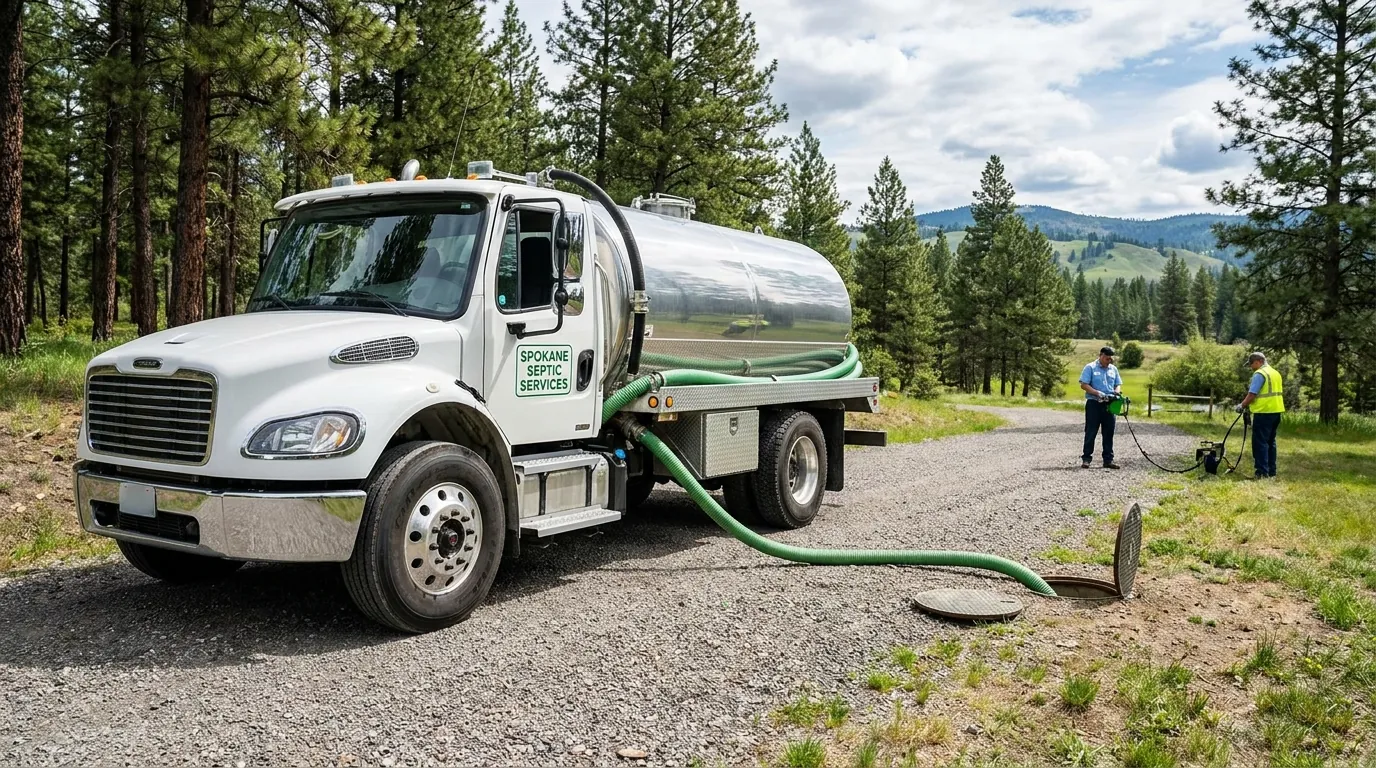
Cleaning vs. pumping a septic tank
People use "pumping" and "cleaning" interchangeably, but there is a real difference. Pumping removes the liquid and most of the floating and settled material. Cleaning a septic tank means getting the compacted sludge that clings to the bottom and corners, the hardened scum crust, and the buildup around the baffles and effluent filter — the material a quick pump-out leaves behind. Over years, that residual layer keeps growing even if you pump on schedule, which is why a full clean matters.
Signs a tank needs more than a routine pump include drains that slow again soon after a pump-out, a persistent odor near the tank, and a tank that measures nearly full ahead of its expected interval. If the effluent filter clogs quickly and repeatedly, that is often compacted solids the tank never fully released. Cleaning the septic tank thoroughly resets the system so the clarified layer — the only thing that should reach your field — actually stays clear.
How septic tank cleaning is done
A proper cleaning takes the tank down to bare compartments and checks the parts that control what leaves it.
-
Full evacuation
Every compartment is pumped of liquid, scum, and sludge. Nothing is left to reseed the buildup, which is the difference between cleaning and a surface skim.
-
Breaking up compacted solids
Hardened sludge on the floor and corners is agitated and drawn out. In tanks that have gone long between services, this is the material that would otherwise migrate toward the drain field.
-
Baffle and filter service
The inlet and outlet baffles are cleared and inspected, and any effluent filter is removed, rinsed, and reseated. A clogged filter is a common cause of repeat slow drains.
-
Interior inspection
With the tank empty and clean, the walls and joints are checked for cracks, root intrusion, or corrosion that could need repair.
-
Restore and record
Lids are resealed and the area restored, and you get a note on the tank's condition and a suggested date for the next service.
Local factors that affect cleaning intervals
How fast a tank needs cleaning again depends on household habits and on the ground the system sits in. Spokane's glacial soils range from free-draining gravels to tighter silts, and slower-draining sites keep effluent in the system longer, encouraging buildup. Households that run a lot of laundry, use a garbage disposal heavily, or send fats and oils down the drain build sludge and scum faster regardless of soil.
Winter and spring conditions play a role too. When wet weather and snowmelt raise the water table around a tank near Mead, Suncrest, or the Valley, a marginal system is more likely to show symptoms, and a full cleaning buys back capacity. If cleaning reveals cracks or failing baffles, that becomes a repair; a septic system inspection is the way to scope it. For routine maintenance between full cleans, regular septic tank pumping keeps the layers in check.
Get your septic tank cleaned
If drains slow again soon after pumping or the tank fills fast, a full cleaning may be overdue. Tell us your tank size and last service date.
Ask us whether cleaning or a routine pump-out fits your situation.
Frequently asked questions
What is the difference between septic tank cleaning and pumping?
Pumping removes liquid and most floating and settled material, while cleaning also removes compacted sludge, hardened scum, and buildup around the baffles and filter. Cleaning takes the tank down to bare compartments so the system starts fresh.
How do I know if I need cleaning instead of just pumping?
Repeat slow drains soon after a pump-out, a filter that clogs quickly, or a tank that measures nearly full ahead of schedule all point to buildup a routine pump missed. A quick check of the tank tells us which service you need.
Will cleaning fix a smell coming from my drain field?
It can if the odor comes from solids that have escaped a poorly cleaned tank. If the field itself is saturated or failing, cleaning helps but the field may need separate attention, which an inspection can confirm.
How often should a septic tank be cleaned?
It varies with household size, water use, and soil, but many Spokane-area tanks benefit from a thorough cleaning every few years alongside routine pumping. The layer measurements taken during service set the right interval for your home.